


National Geographic 1991 September
Publisher: National Geographic
Format: Paperback
ISBN: none
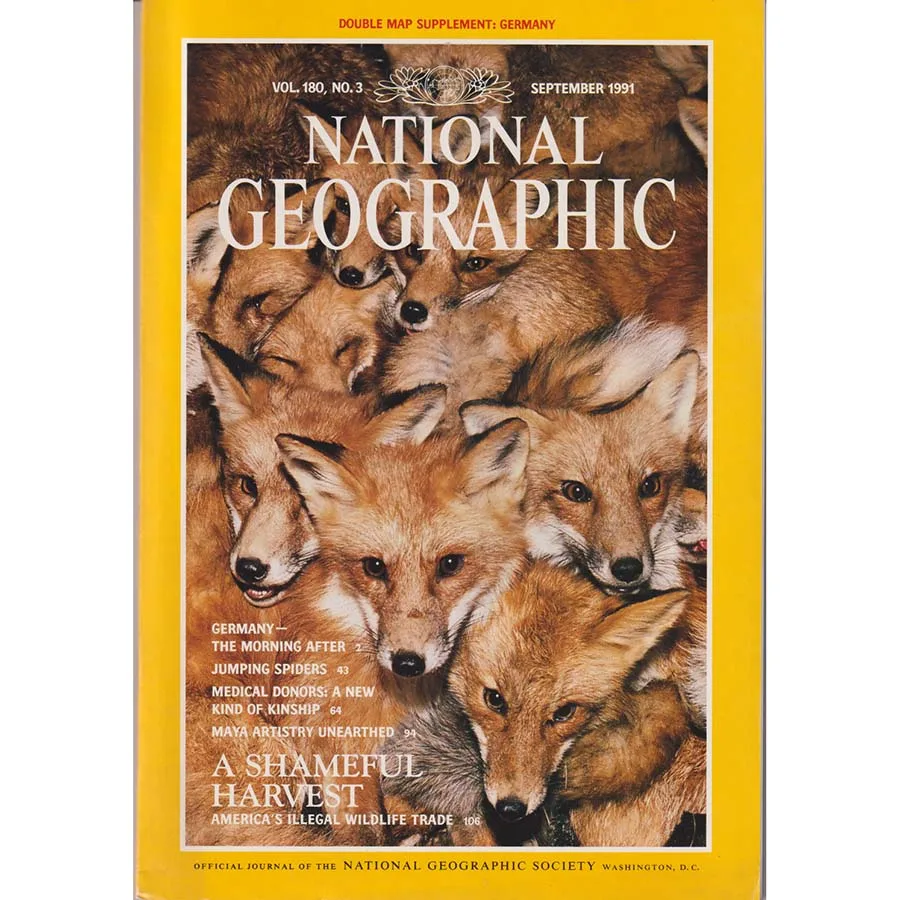
National Geographic, September 1991: the issue that arrives wearing a double map supplement: Germany like a sensible blazer… while the cover is essentially a fox-themed group chat with no moderator and a suspicious amount of side-eye.
Front and centre is A Shameful Harvest: America’s Illegal Wildlife Trade, and the cover image is a pile-up of red fox faces that’s both beautiful and faintly accusatory. They look soft. They look alert. They look like they’ve just discovered you once bought something “real fur” in 1987 and are quietly judging you from a warm, rust-coloured scrum. It’s the perfect Nat Geo trick: lure you in with irresistible wildlife aesthetics, then hit you with the moral freight train. Come for the foxes; stay for the uncomfortable realisation that the planet’s most dangerous predator is still… us, with a receipt.
Inside, the big story is exactly what it sounds like: the shadowy, sprawling world of poaching and trafficking, the demand that makes it profitable, and the very human chain of “just this once” choices that ends with ecosystems paying the bill. Nat Geo in this era does seriousness with glossy paper and immaculate photography—like a beautifully lit lecture where you can’t slip out to make tea because the evidence is right there, staring at you in 35mm colour. The irony is that it’s an “exploration” magazine and this is a journey into something depressingly close to home: the marketplace.
Then, because 1991 National Geographic cannot resist being four magazines at once, you also get:
-
Germany — The Morning After (and yes, there’s a double map supplement): reunification-era vibes, the “what now?” mood, and that early-90s sense that history has abruptly shifted gears and everyone’s trying to find the clutch. It’s the geopolitical equivalent of waking up after a party and discovering you’ve agreed to redecorate the entire house.
-
Jumping Spiders: a palate cleanser that is not, technically, calming. Expect big eyes, sudden leaps, and a new respect for creatures that are basically eight-legged parkour athletes. If you’ve ever wanted to feel both delighted and slightly itchy at the same time, congratulations.
-
Medical Donors: A New Kind of Kinship: humanity, ethics, and the quietly profound ways science reshapes family and identity—handled with the magazine’s classic earnestness, i.e., “here’s a complicated topic, let’s treat it with dignity and really good photos.”
-
Maya Artistry Unearthed: because even in a single issue about modern Europe, wildlife crime, and medical ethics, Nat Geo will still casually drop you into ancient civilisation like it’s popping out for milk.
The overall effect is wildly satisfying: you start with foxes and end up with Germany, spiders, donors, and Maya artefacts, like your brain has been taken on a guided tour by someone who refuses to accept “one theme per journey” as a concept.
Condition: Good, which is perfect for a copy sold by Crappy Old Books—a little lived-in, a little time-travelled, still more than ready to be flipped through on a rainy afternoon while you mutter, “they really don’t make magazines like this anymore,” and then spend twenty minutes staring into a jumping spider’s soulful eyes like you’re the one being studied.
If you want a September issue that’s equal parts cuddle-pile foxes, moral reckoning, post-history Germany (with maps!), and surprise arachnid athletics—this is it. Just don’t expect those foxes to forgive you.
Keep browsing: See more National Geographic books Other books by National Geographic
